
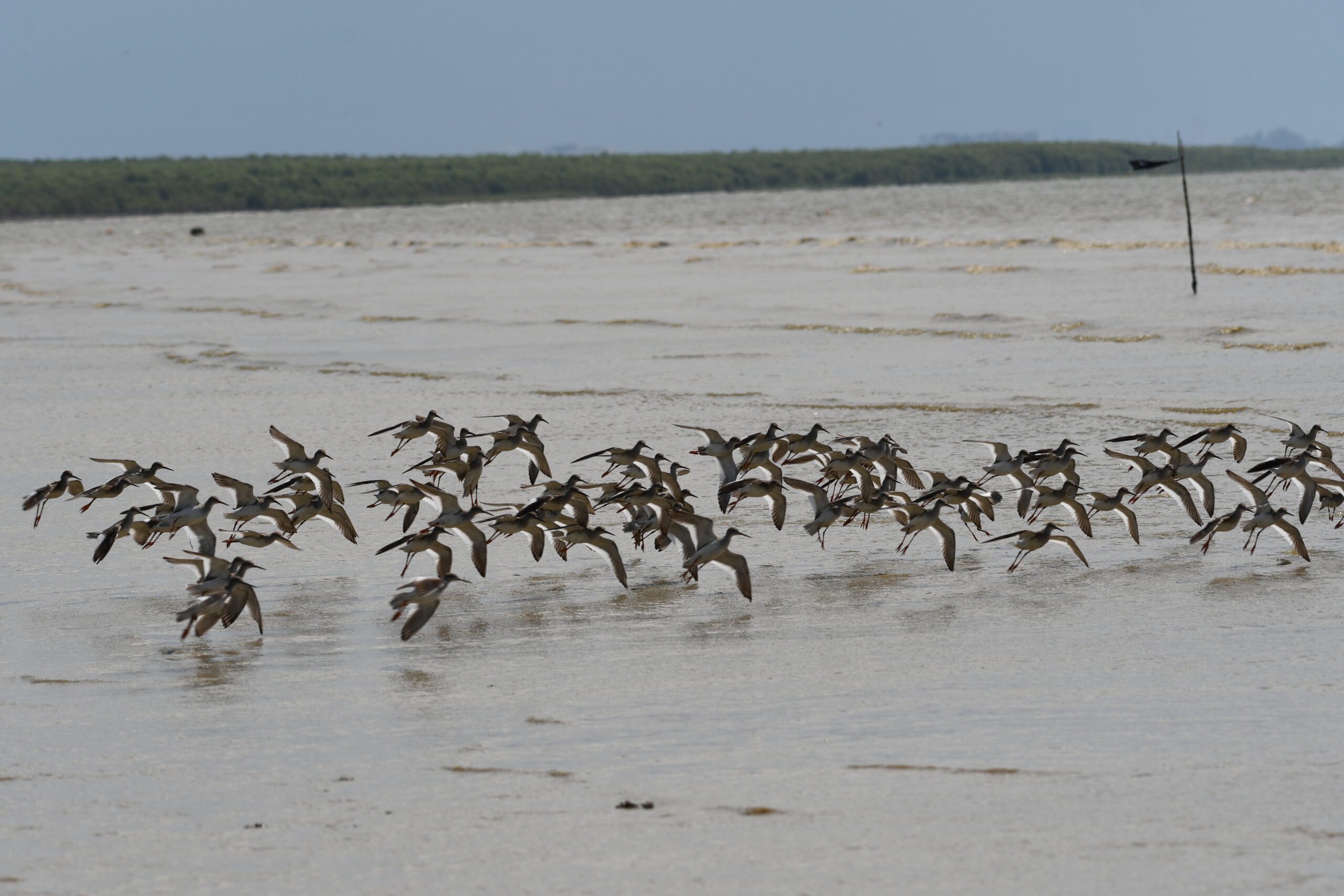
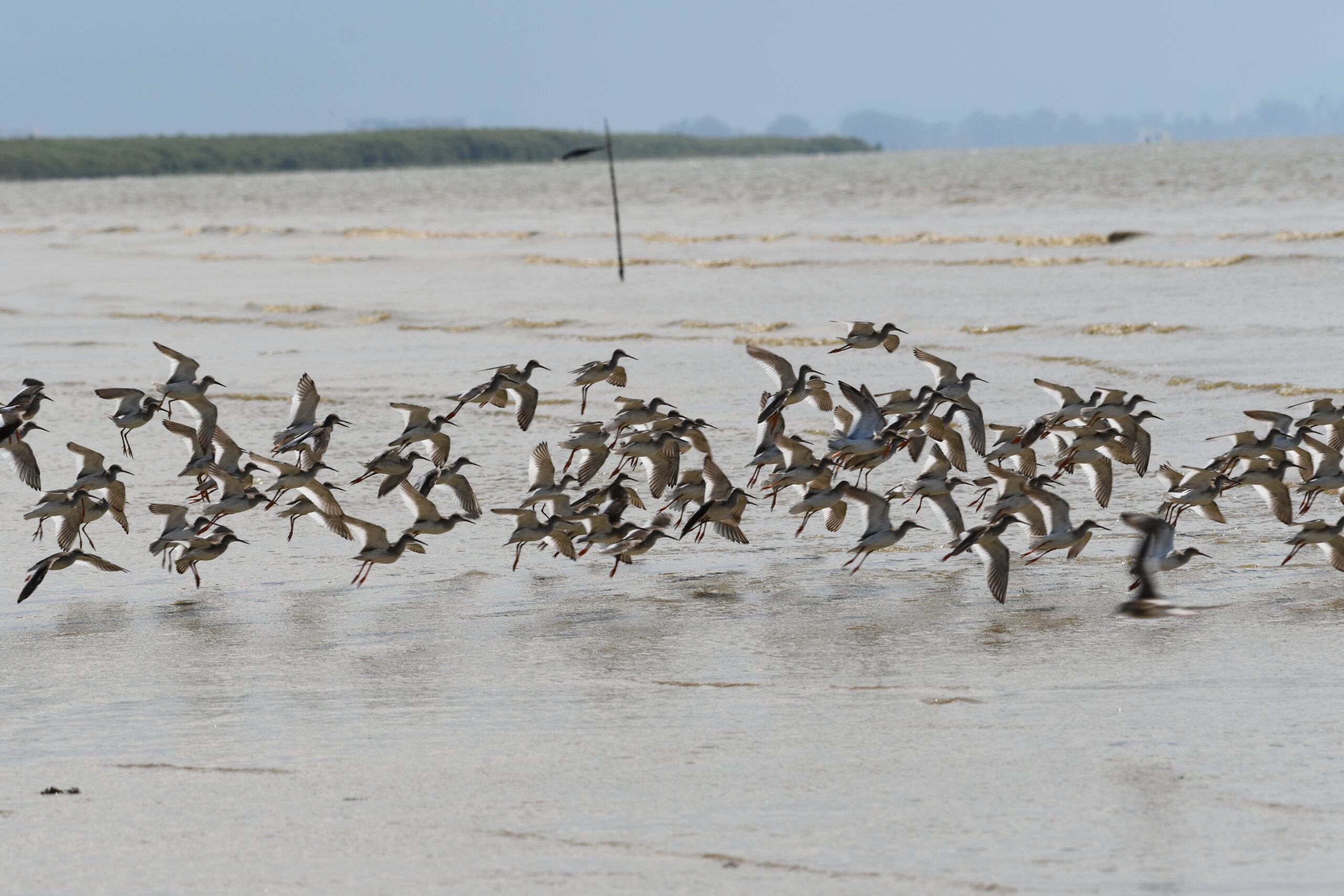
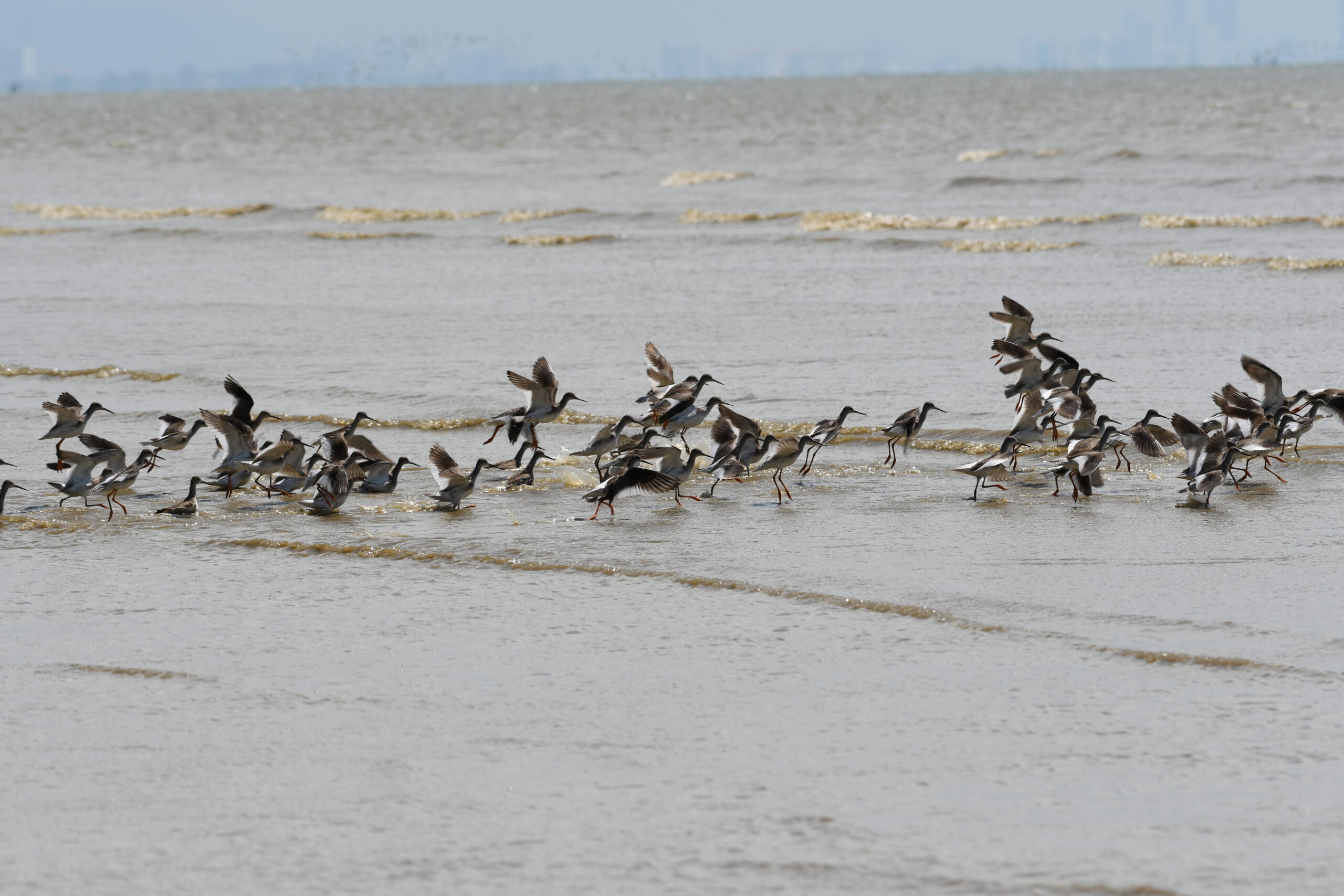
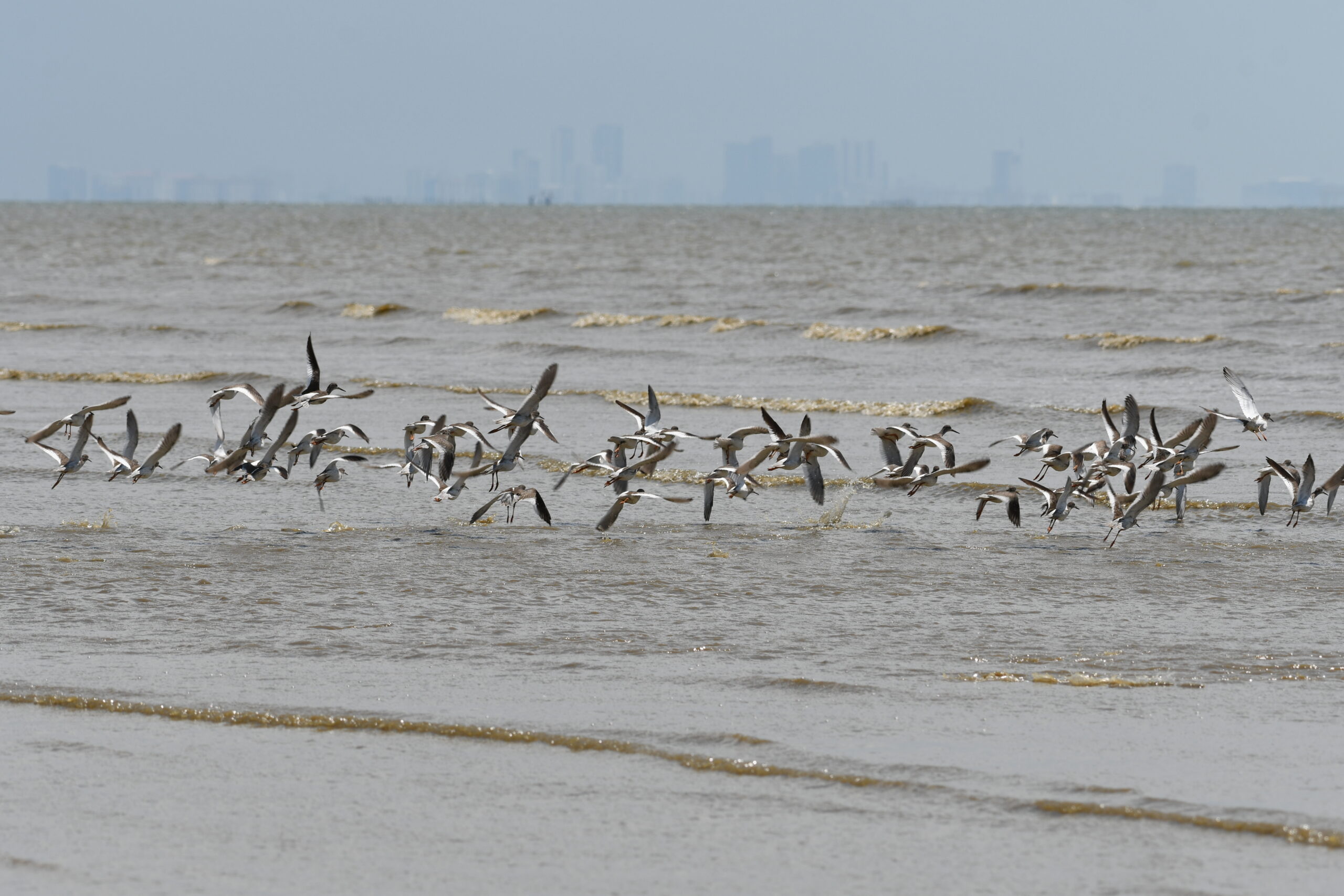
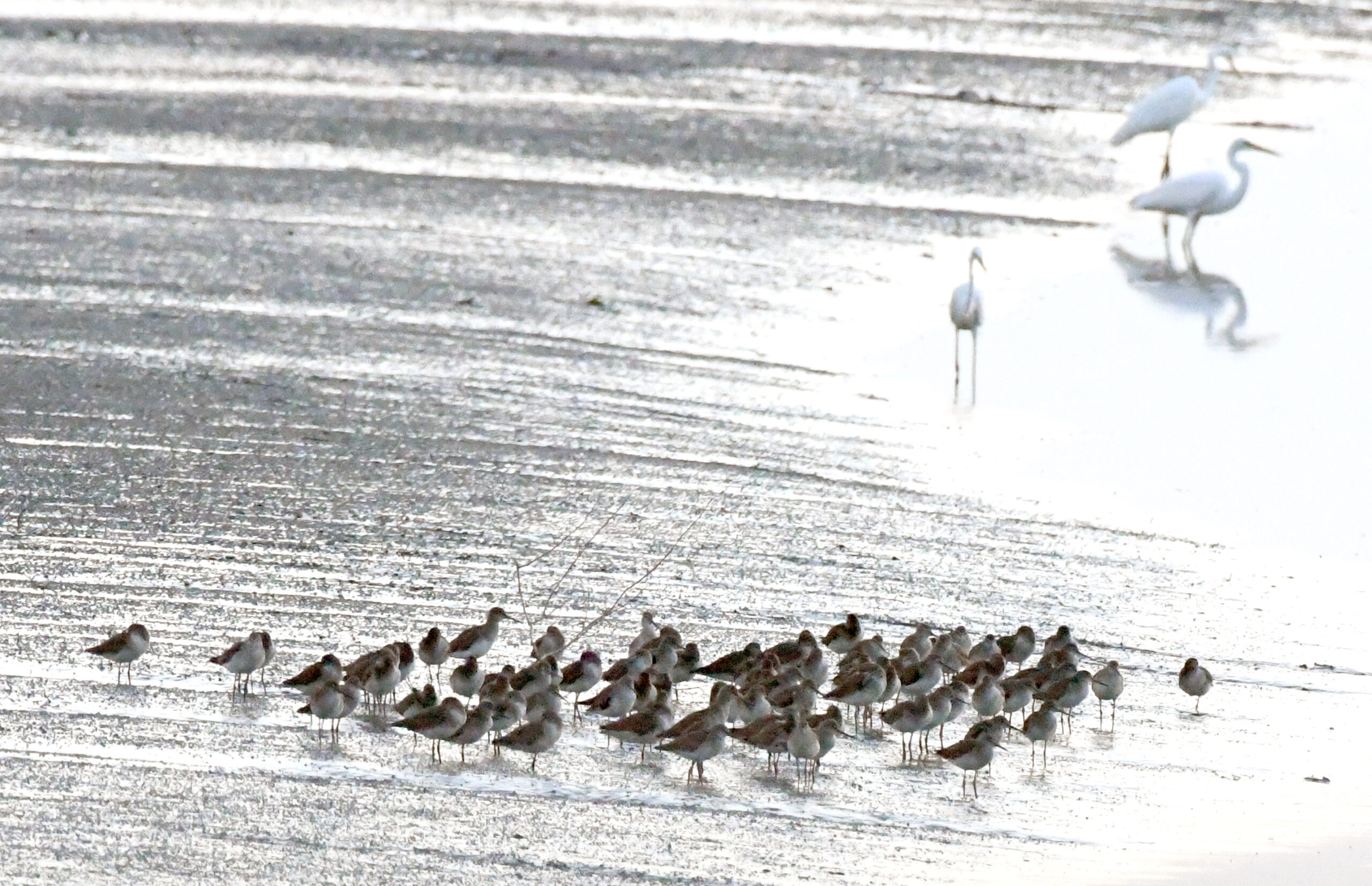
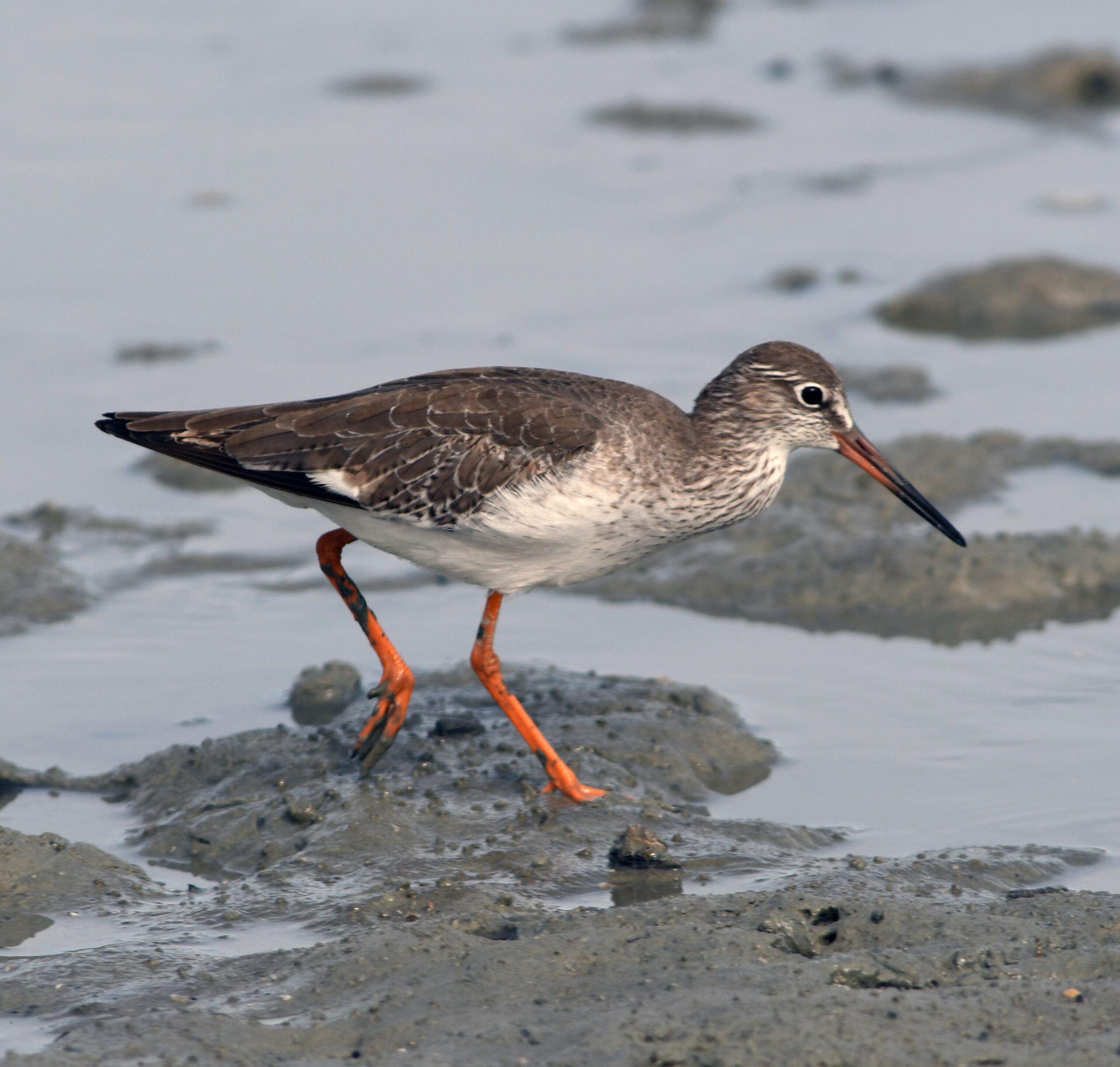

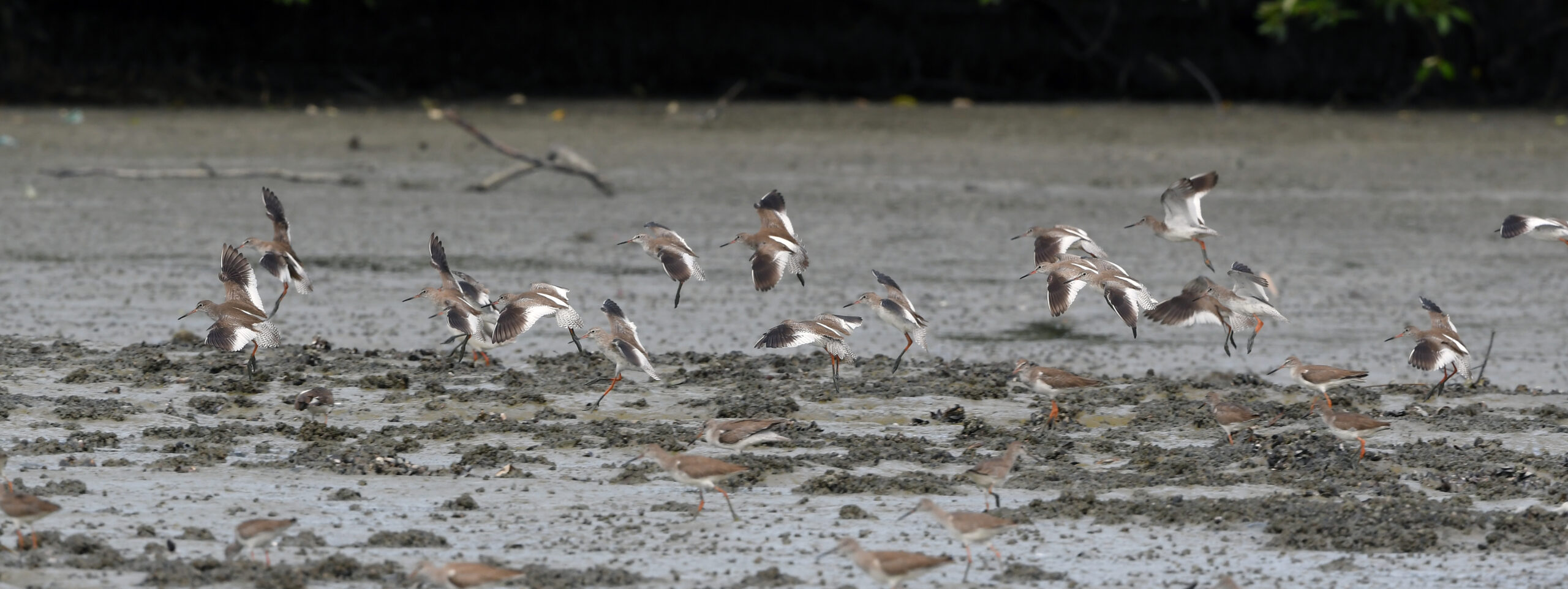
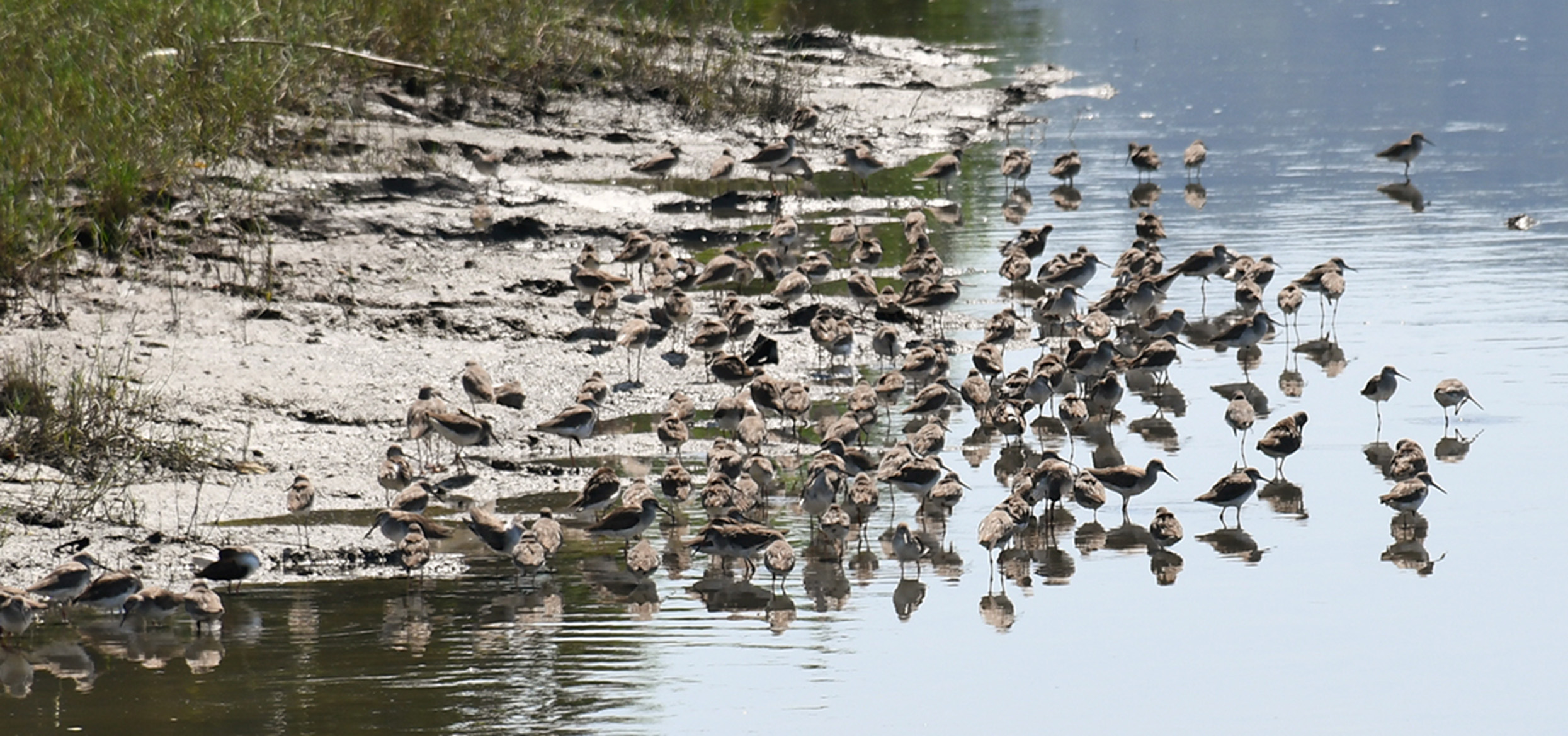
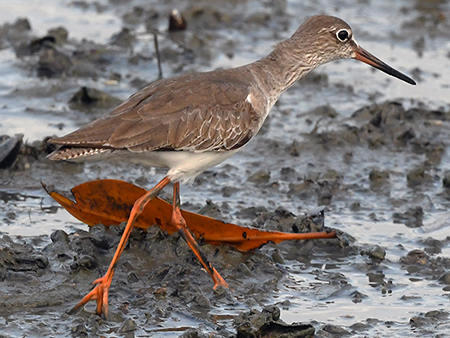
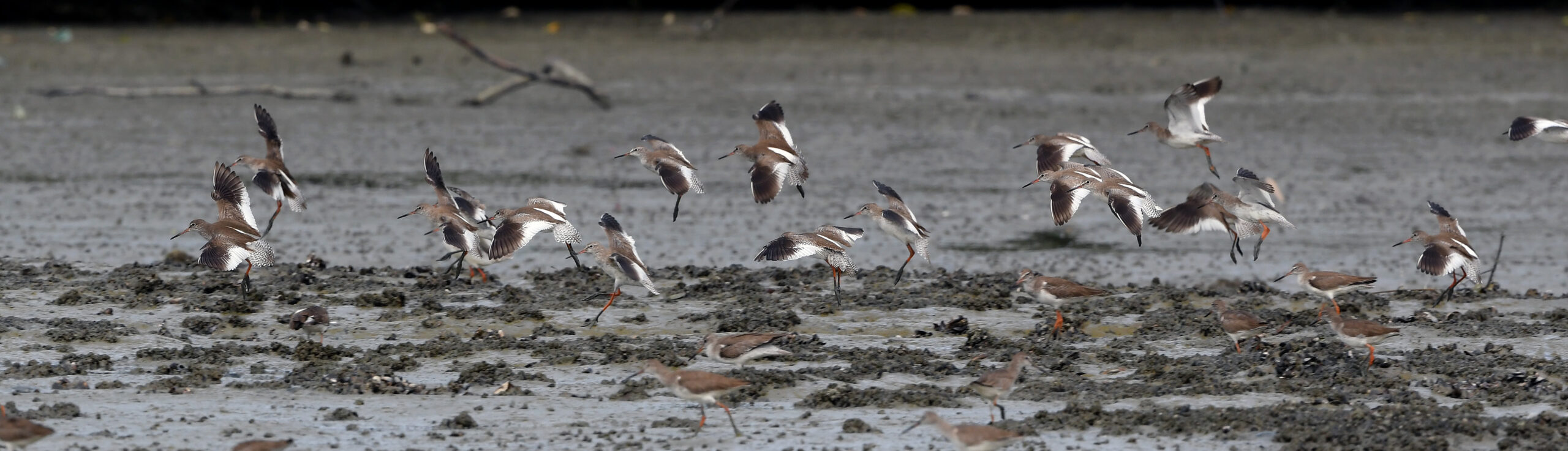
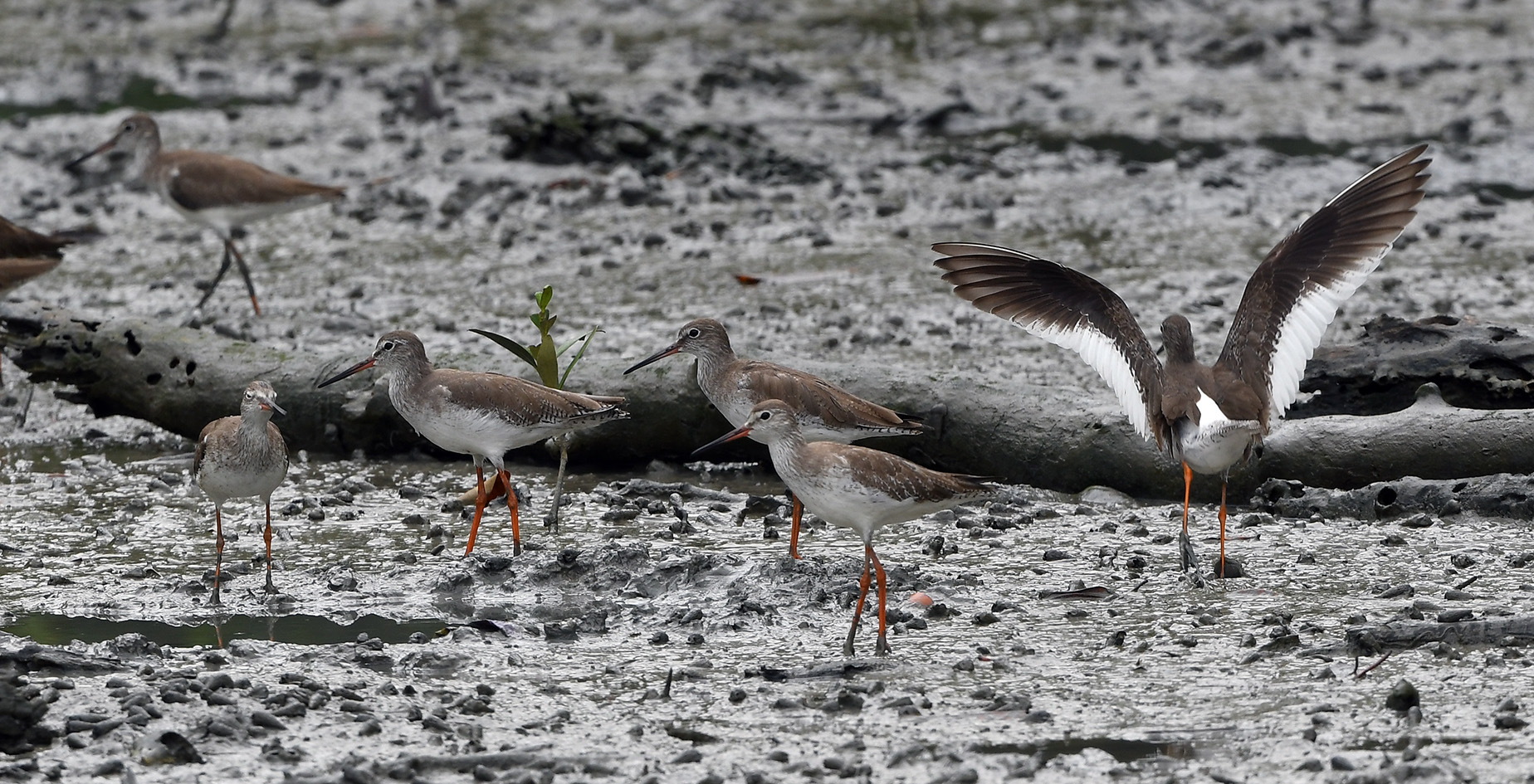
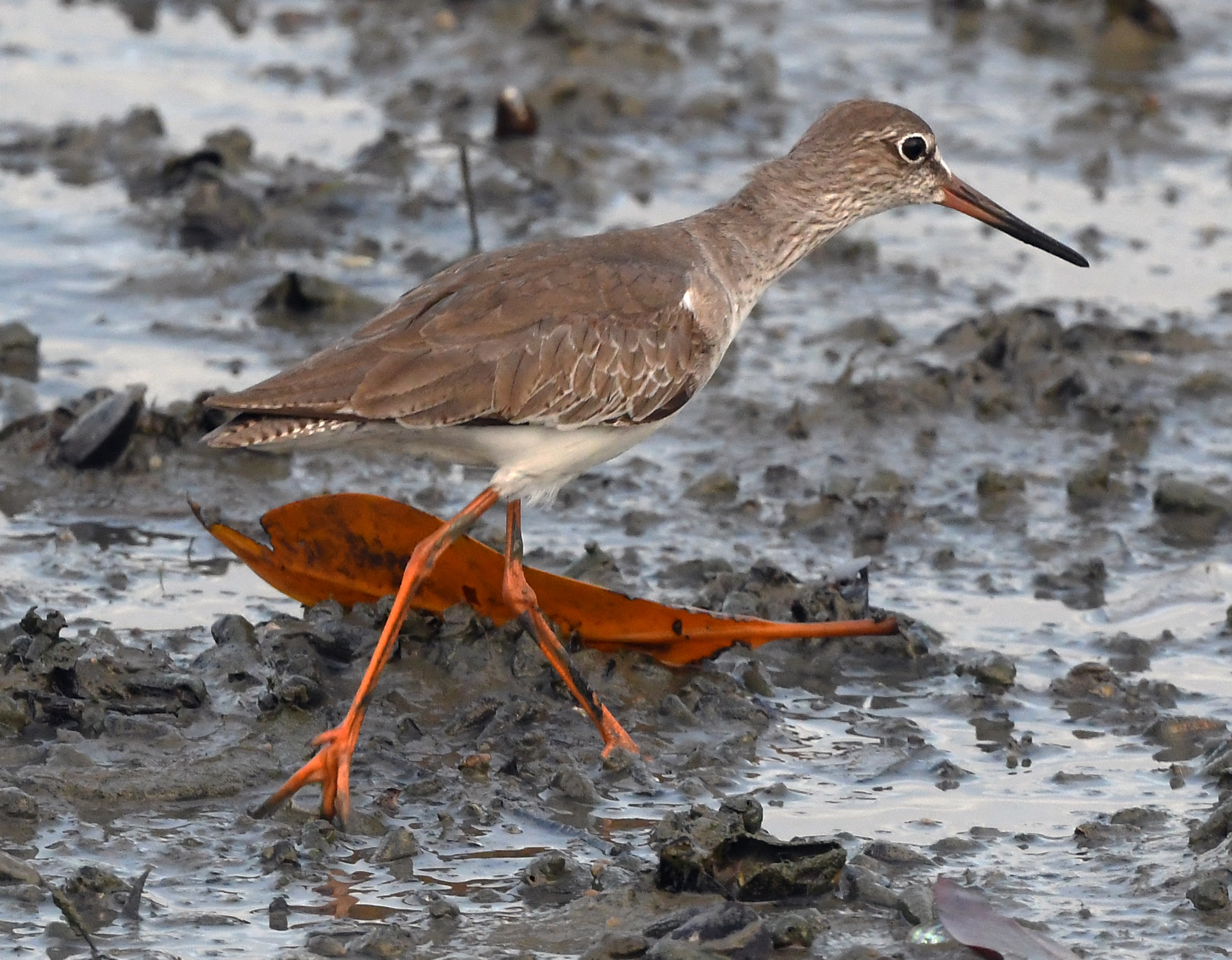
A medium-sized wader, it has brownish, streaked plumage in breeding season and a plainer grey-brown look in winter. Its most notable features are its long, bright red or orange legs and a straight bill. In flight, it displays a prominent white triangular wedge on its back and white wing stripes, and a dark front edge and white trailing edge.
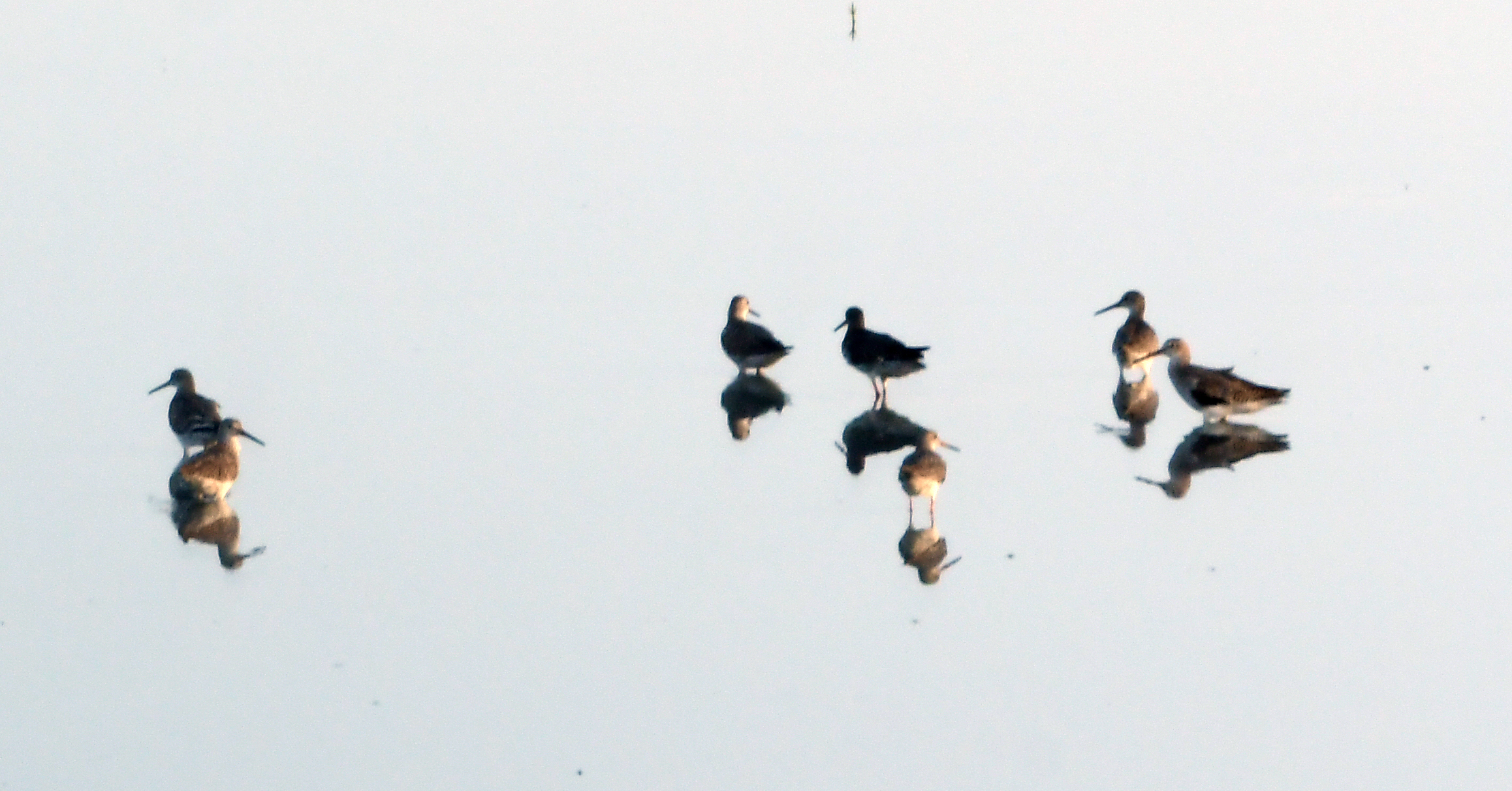
Redshanks are common in wetlands, marshes – including those inland, like paddy fields, estuaries, and mudflats. They are known for being wary and noisy, often acting as an “early warning system” for other birds with their loud piping calls when predators are near. However they could be least shy compared to other shorebirds and waders, allowing closer approach.
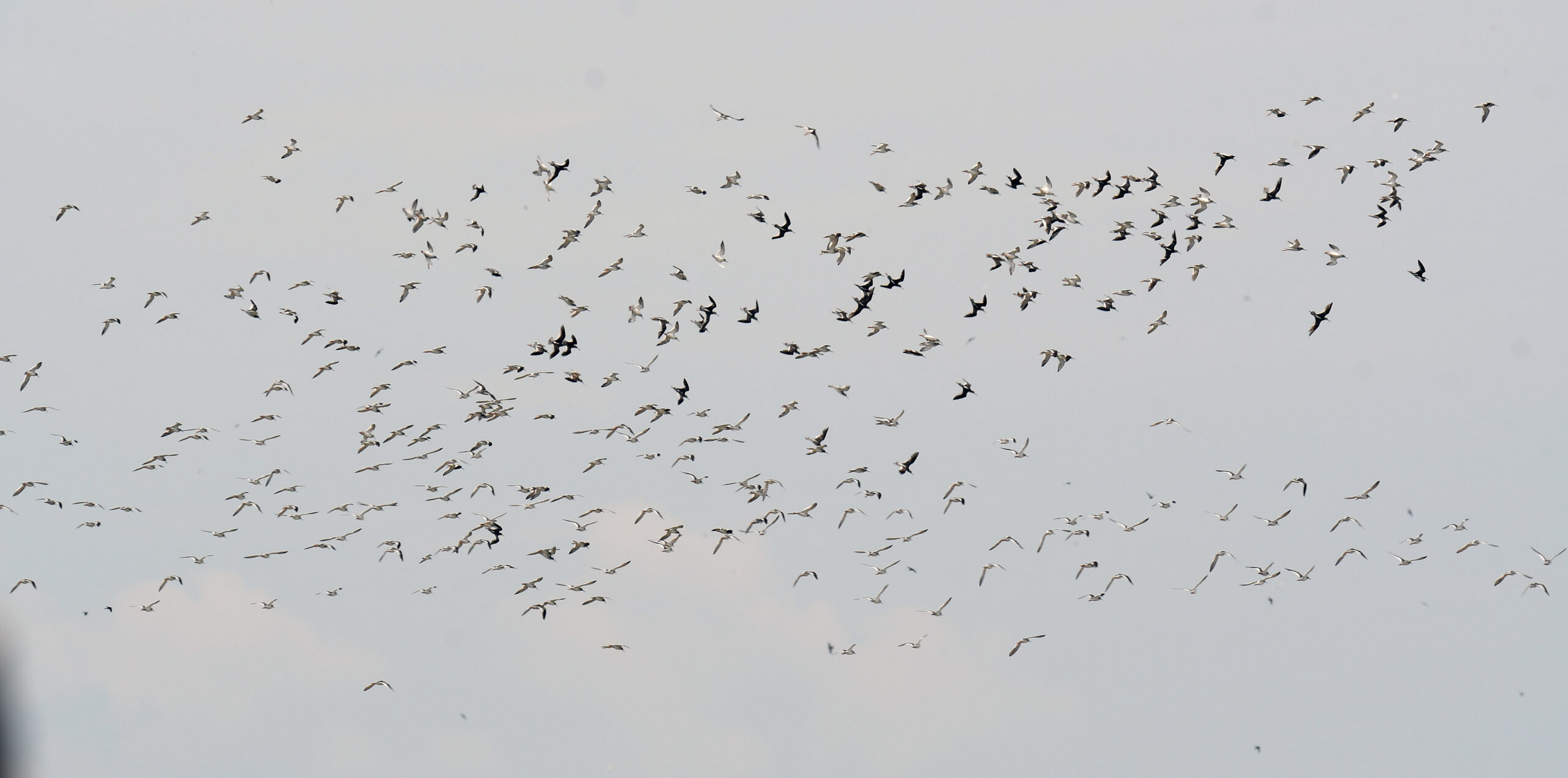
It is probably the most common, widespread and abundant migratory wader throughout Seberang Perai. Flocks of hundreds and thousands are often found in the Teluk Air Tawar – Kuala Muda coast IBA. In Sbg Perai Tengah and Selatan flocks will be smaller but still in hundreds approaching thousand. The total number of wintering Redshanks for the whole of Penang state should be about ten thousand, with about three thousand on the Island and seven thousand on Seberang Perai.
At Teluk Air Tawar – Kuala Muda: the most numerous wader on this coast. MNS counted up to 3,000 in April 2025, and around 2,000 stayed through the middle of the year, so it can be seen in every month. It feeds out on the mudflats at low tide and comes closer to shore to rest as the tide rises. Numbers are highest from October to February. See When to see shorebirds at Teluk Air Tawar – Kuala Muda.

It is not permitted to use the contents of this website for advertising, marketing, or the sale of products and services without prior authorisation from MNS. Please contact mnspenang@yahoo.com.